Northern Languages
photo credit: Michèle Mackasey
photo credit: Michèle Mackasey
—Keyboard Developer, Chevez Ezaneh—
Canadian Anishinaabe author Susan Chiblow describes Indigenous languages as bound with the land, with relational ways of naming, seeing, and relating to the world, uttering aspects of a specific waterway or terrain in unique and intimate ways. These languages lend themselves to active learning that takes place in the home community, on or near the land.
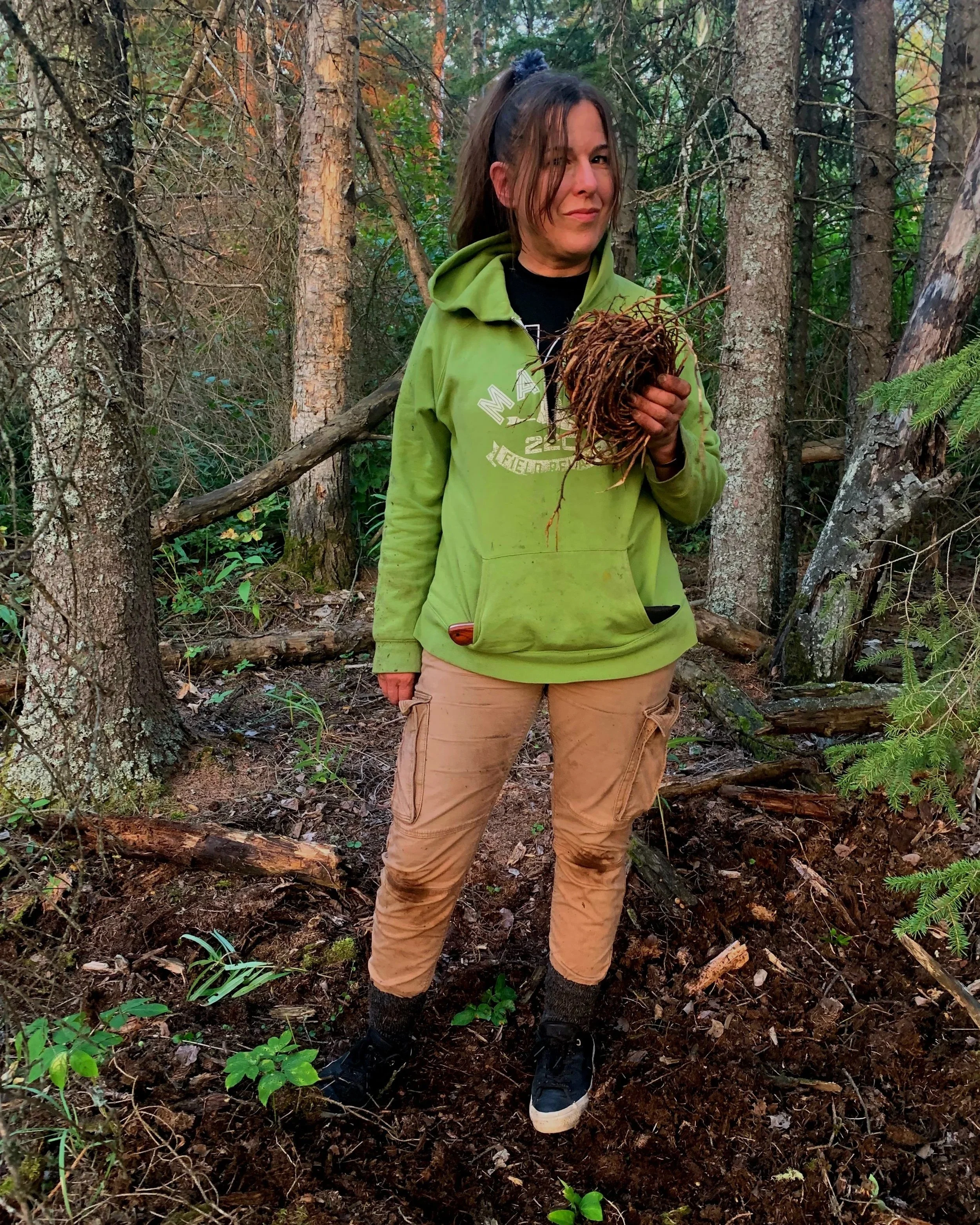
Started in 2022, the Northern Languages program was developed by visual artist Michèle Mackasey in response to interest expressed to her, by her extended family and elders in the Northern community of Patuank, for more activities that would promote retention of their Indigenous language among the youth in the community. In response to these concerns, Michèle along with Denesulene language specialist Elder Carol Estalshenen began bringing language-based programming to the youths of English River First Nation in Patuanak.
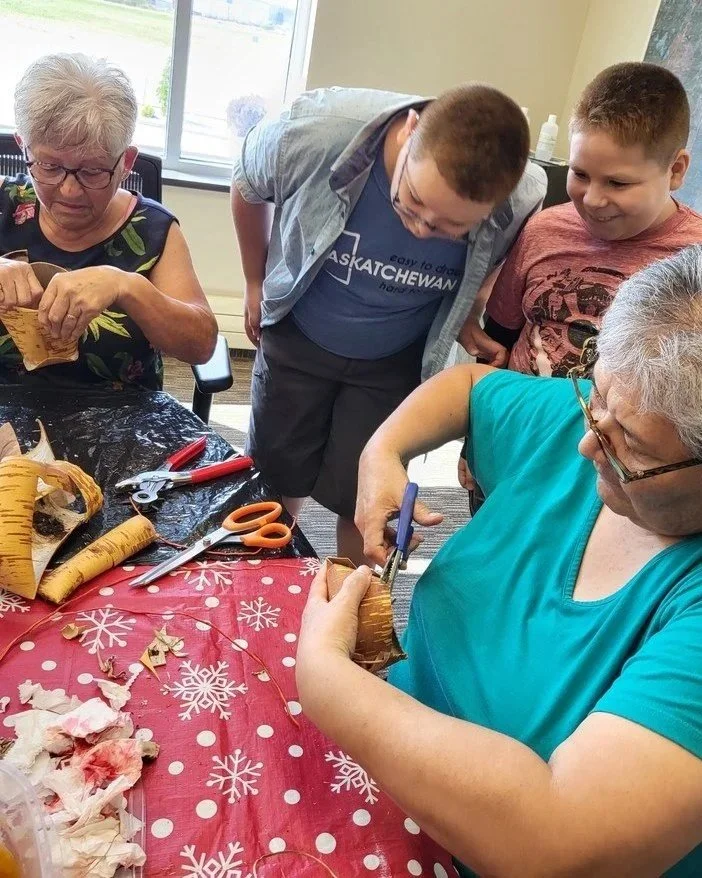
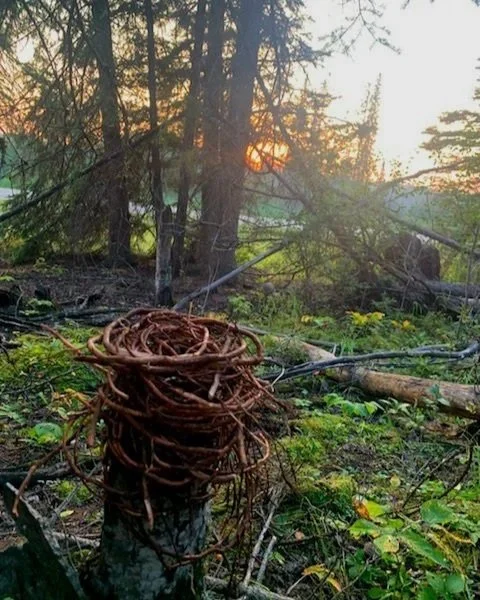
In that August, as the weather warms and the sap began to flow, the Patuanak basket makers collected materials for workshops where students gathered in cabins by the river and worked closely with Elder Leona Aubichon, as she showed how to treat and form birchbark into beautiful and useful baskets, in the same way that she was taught by her grandmother. Through this immersion of Indigenous language in their daily life, young people grow to understand that everything comes from the land— food, family, language, knowledge—and that an intimate connection to the land is embedded within the language itself.
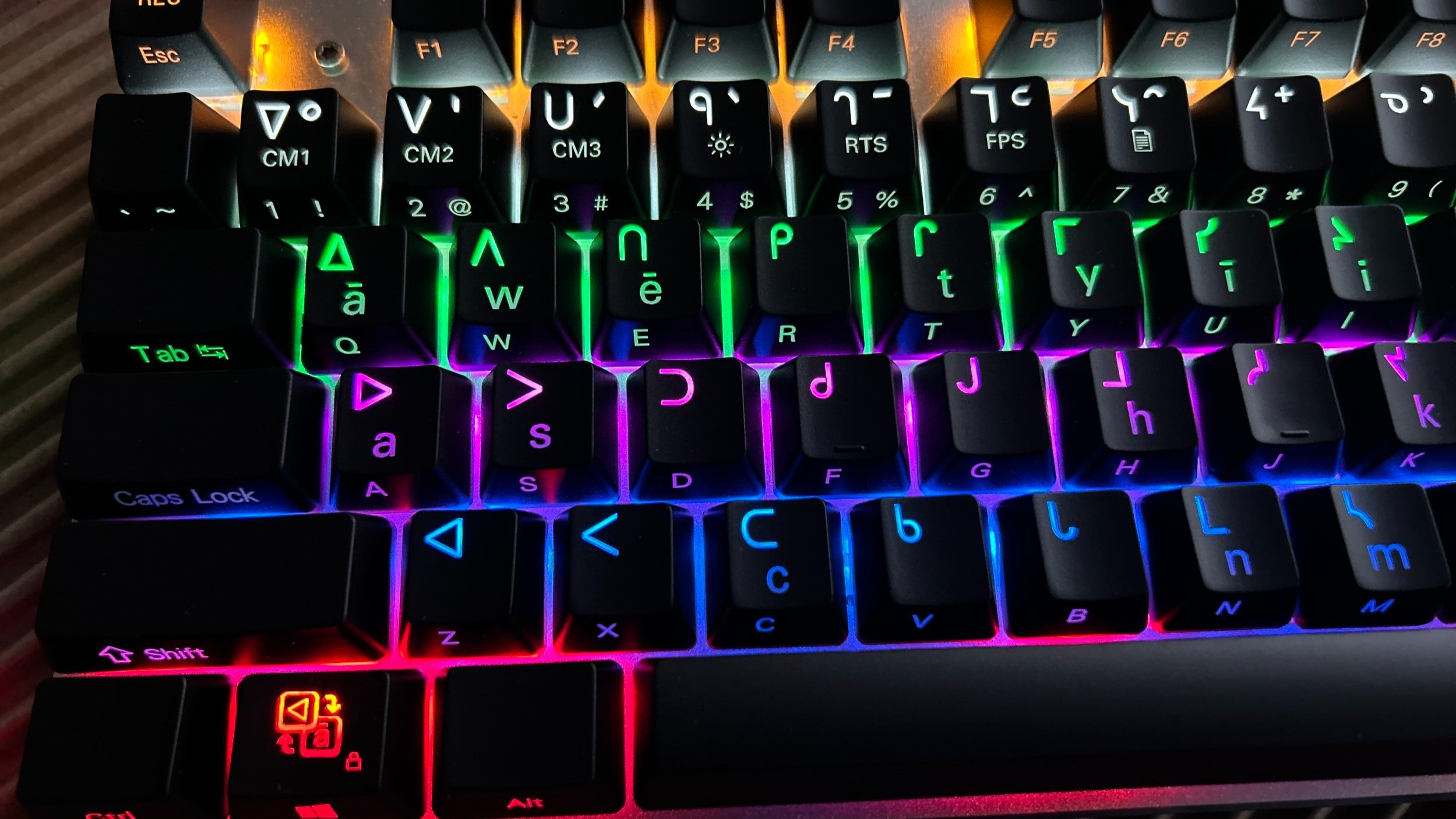
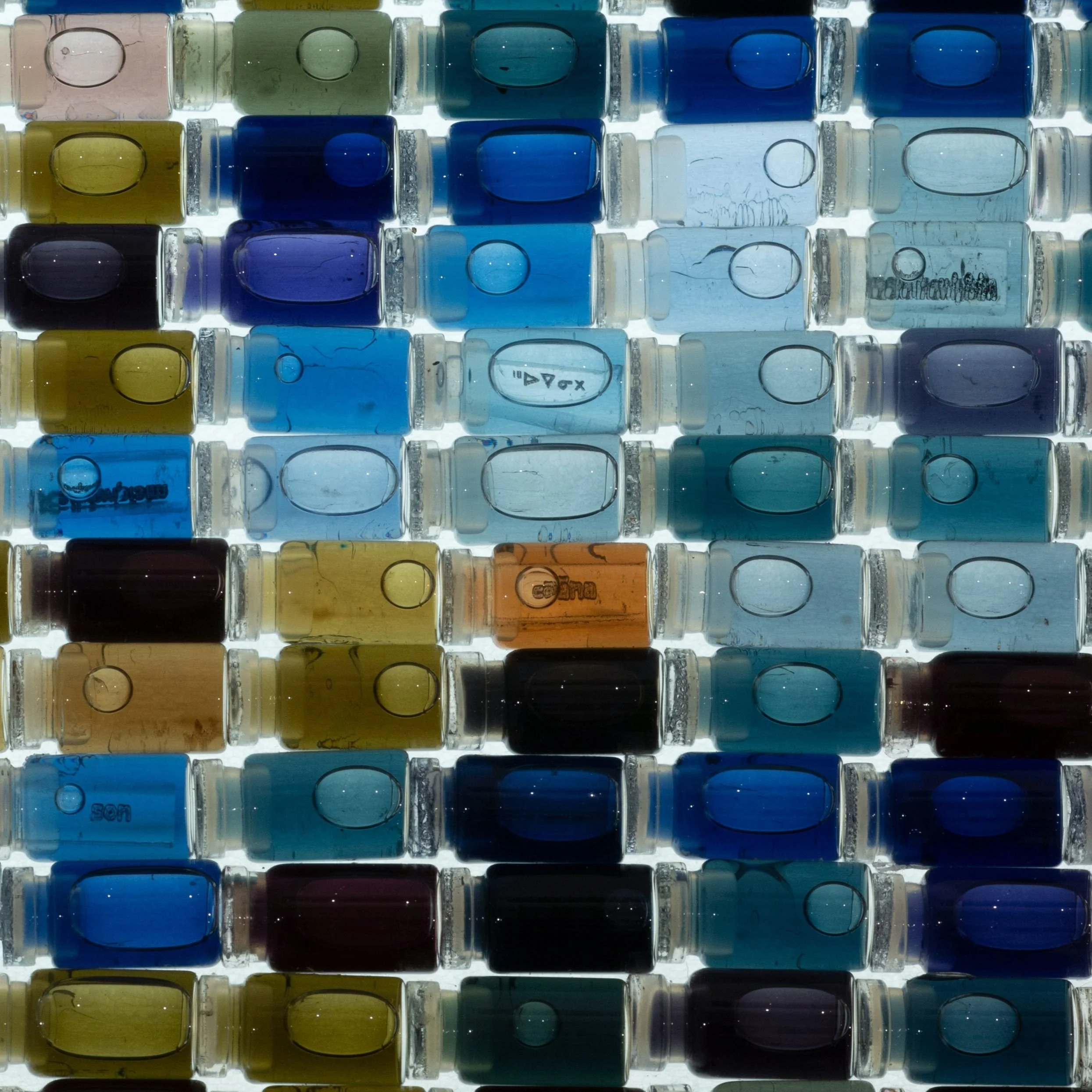
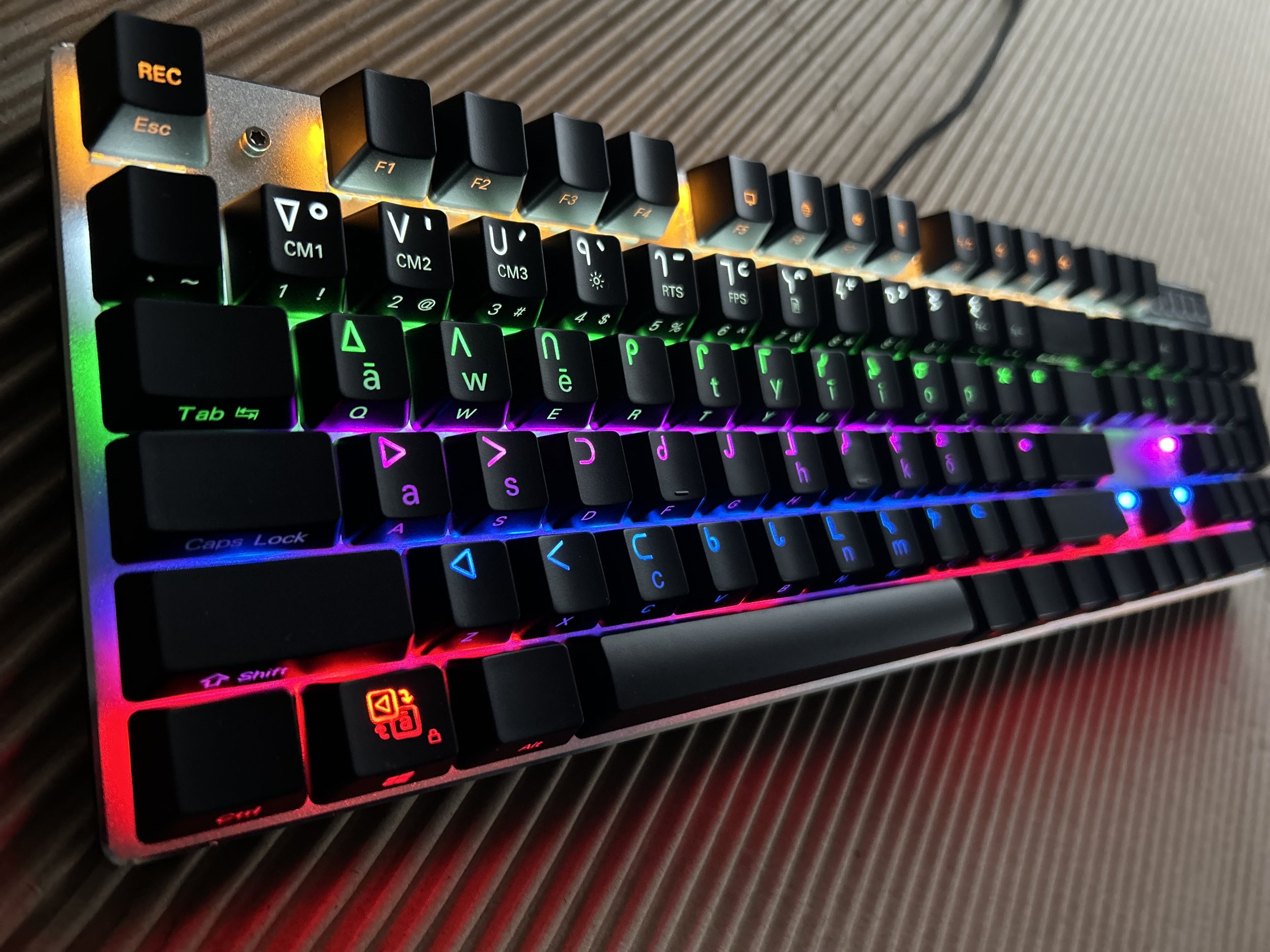
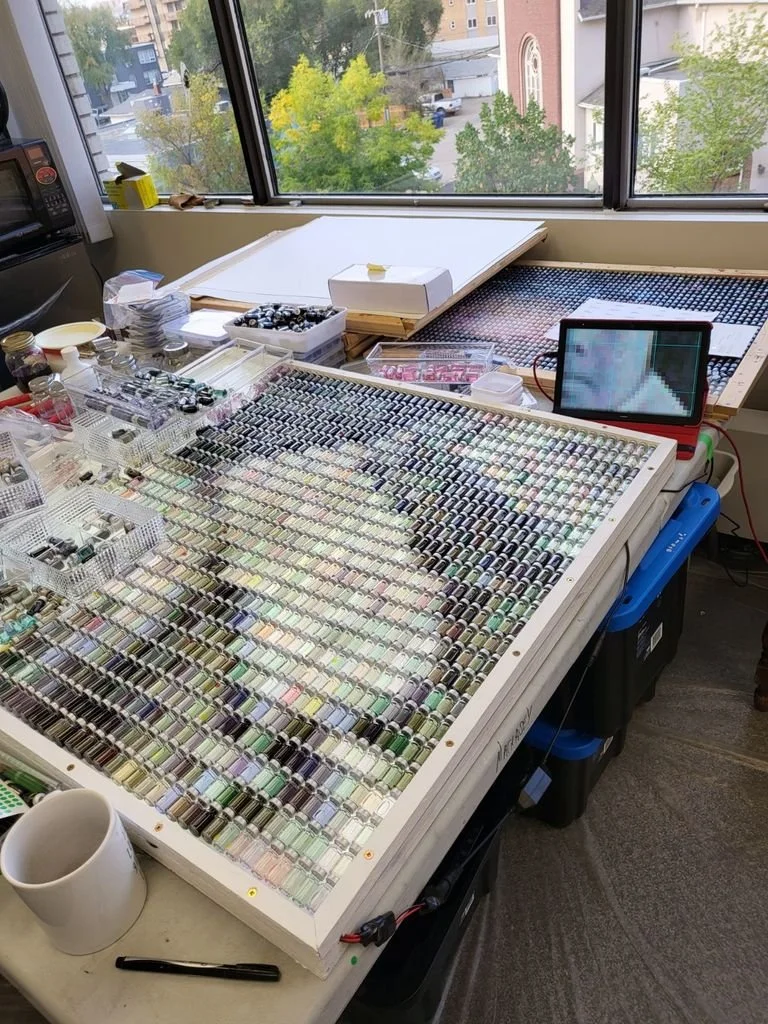
As the program continues throught the years, Michèle and Elder Carol have been collaborating with Patuanak youths in the creation of a collective “bottle portrait” commemorating a local student who passed away in the Beauval Indian Residential School. The bottle portrait is constructed with 17,000 tiny glass bottles. Each bottle is filled with coloured liquid, to create a pixelated image when the bottles are placed side by side. The bottles are engraved with a small message typed in youth participant’s own language using Indigenous Language Keyboards built by Densuline developer Chevez Ezaneh, a member of the English River First Nation in Patuanak. According to Chevez:
“Growing up, I witnessed and continue to witness the challenges faced by my people in keeping our languages alive amidst rapidly changing social and technological landscapes. The prospect of combining modern technology with traditional knowledge to support language learning and cultural exchange was incredibly compelling to me. It's about creating bridges between generations and facilitating conversations that might otherwise have been lost. Witnessing the children of my community effortlessly use the keyboards felt like the ultimate validation of all my efforts. Something clicked, and I remember thinking to myself that this is what it was always about—empowering the next generation. Their engagement and quick adaptation to the technology underscored the project's success, reinforcing the belief that focusing on the youth is the key to preserving and revitalizing our linguistic heritage.”
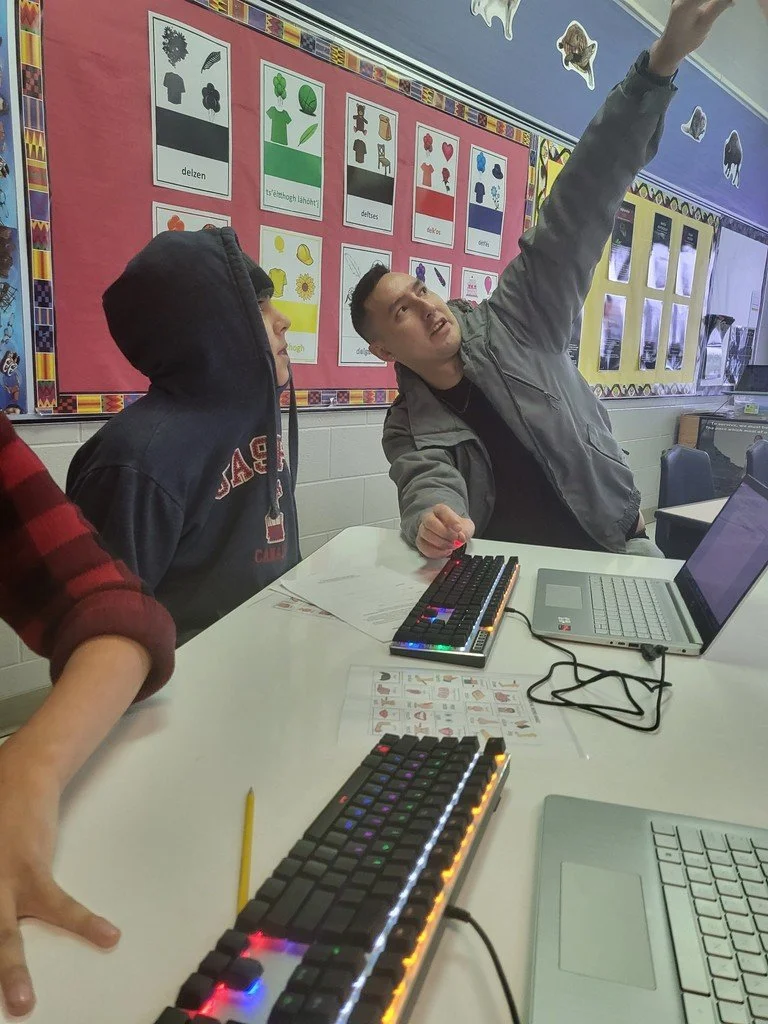
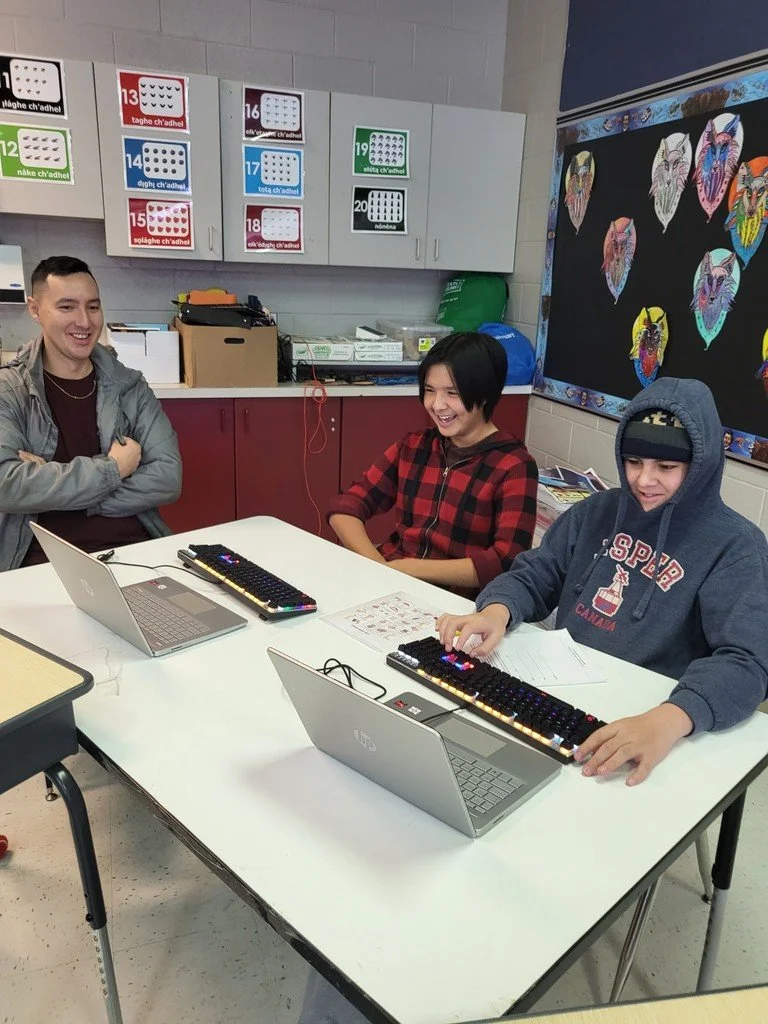
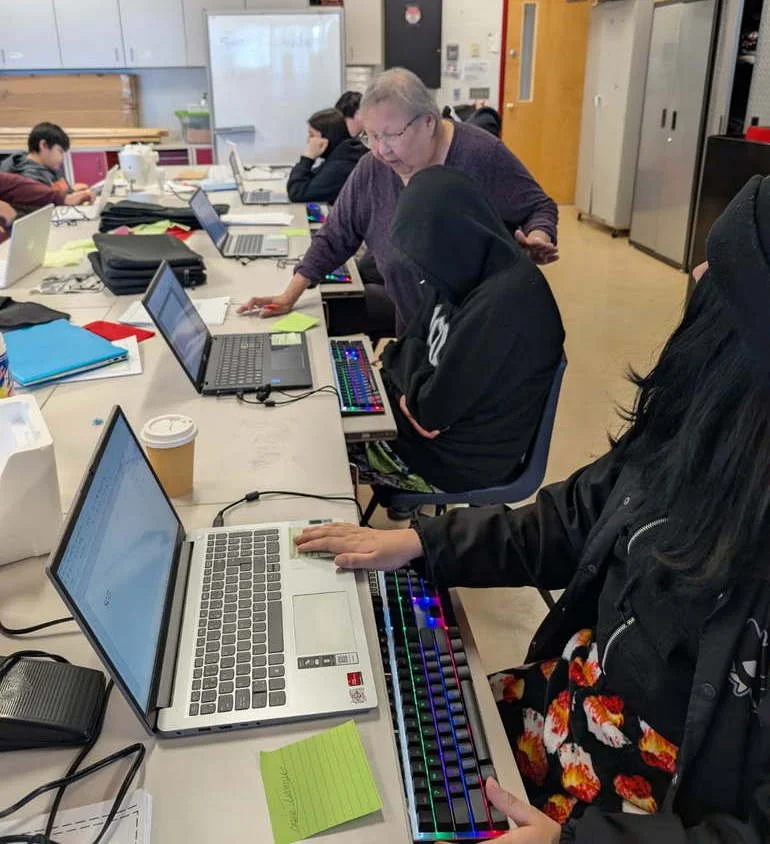
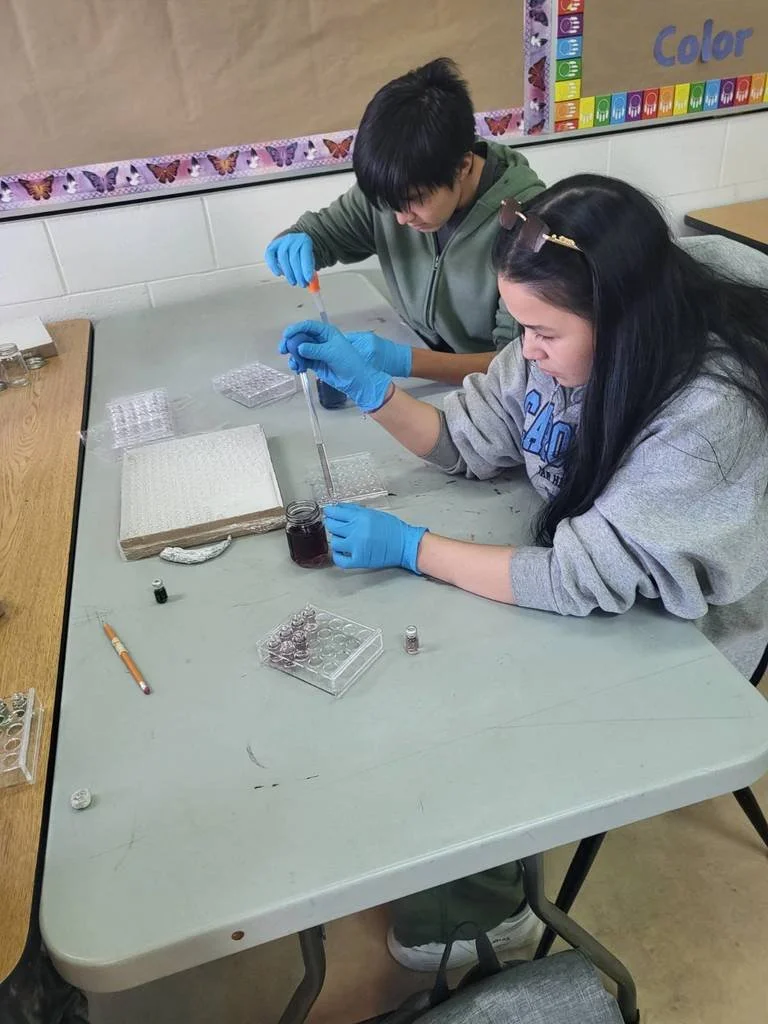
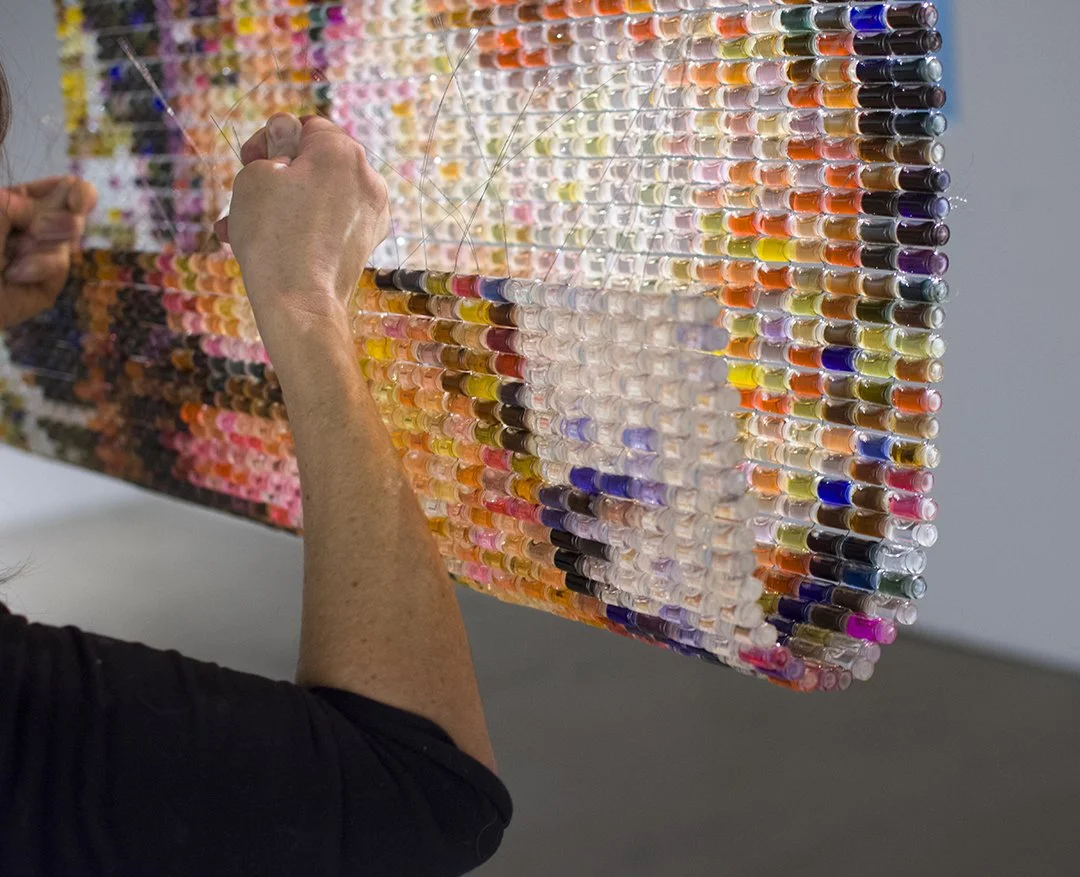
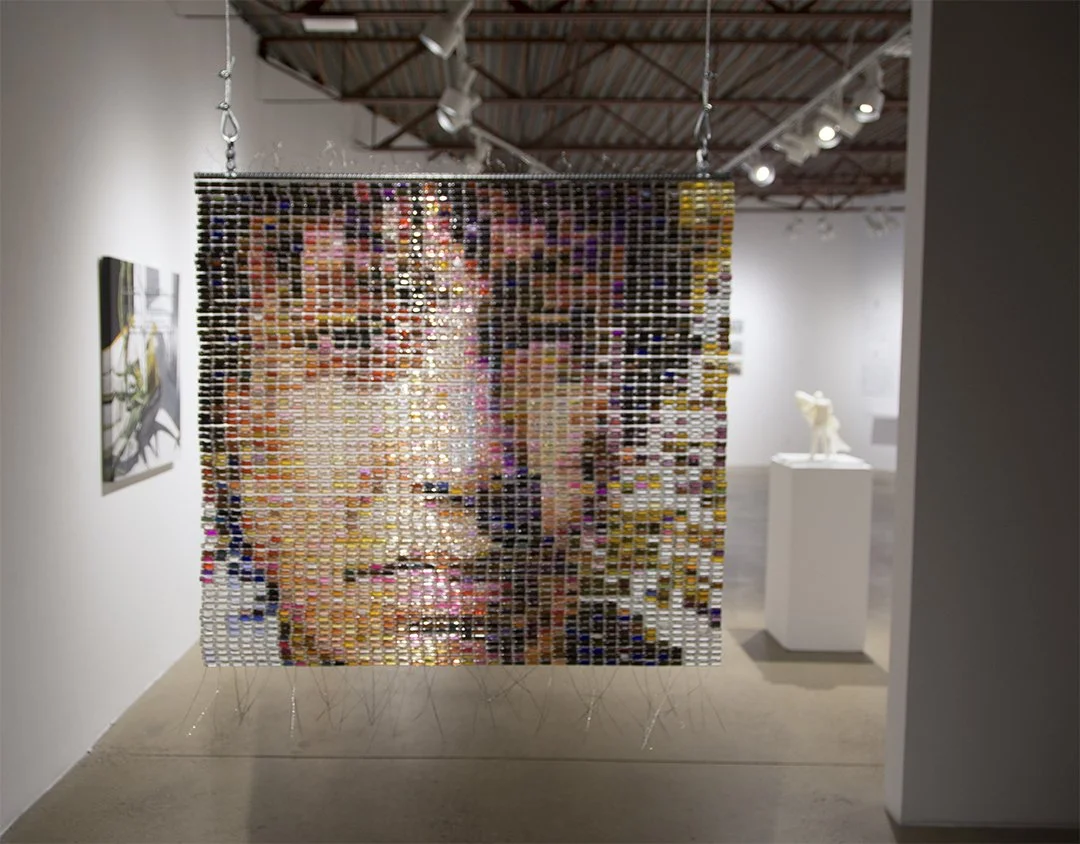
The project aims to inspire the next generation in the continuous reclamation and preservation of their Indigenous language, enabling the youths to communicate more fully by using their own languages in daily life. Experimenting with the Indigenous language keyboards and using them in creative and innovative projects, engages the youth to explore their languages using interactive technologies. The language teachers in the community found that their youth respond strongly to the keyboards, and that the creative activities motivate the students to learn vocabulary in a new way. A First Nation keyboard was loaned to the St. Louis school in Patuanak so that the teachers and students could continue to use it in the classrooms between workshops.
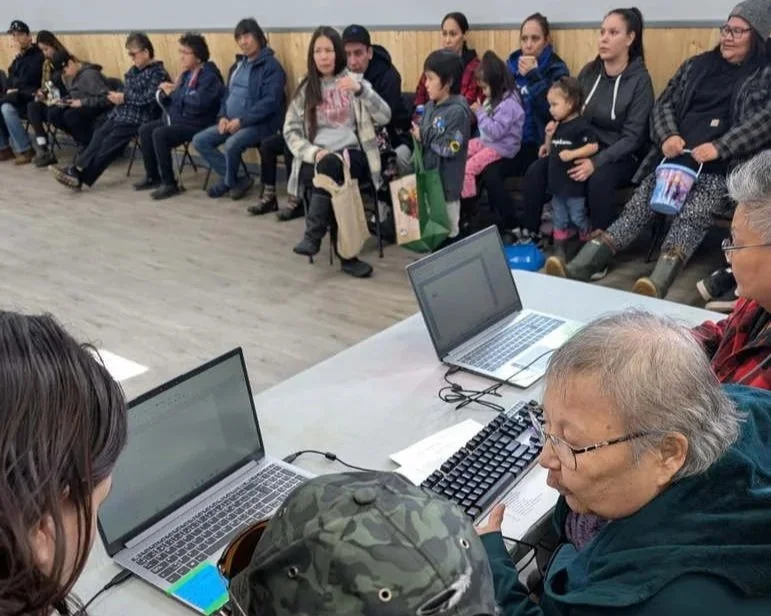
A turning point in the program occurred in May of 2025, when the English River First Nation Band Council invited Michèle and Elder Carol to present their project at a gathering of over 200 community members in the local hall. A number of community members were able to experience aspects of the project and interact with the Dene language keyboards. After their presentation, the Band Council dedicated the funds to buy Indigenous language keyboards for all the classes in the school in order to promote Dene language literacy in their community.
PHOTO CREDIT: MICHÈLE MACKASEY
STSTARTING YEAR
: 2022ARTISTS/CONSULTANTS
: Michèle Mackasey, Lead Artist
: Chevez Ezaneh, FN Keyboard developer
: Angel Ben, Studio Assistant (2023-24)
: Beskkaai Paul, Studio Assistant (2023-24)ELDERS
: Audrey Ben (2022-24)
: Carol Estralshenen (2022-26)
: Leona Aubichon (2022)
: Nap Daignault (2022)LOCATIONS
: Grasswoods urban reserve education facility, Saskatoon (2022)
: Rossignol High School, Île-à-la-Crosse (2022)
: St. Louis School, Patuanak (2022-26)
: Patuanak Health Clinic (2022)
: White Buffalo Lodge, Saskatoon (2023-24)PARTICIPANTS
: 30 ENGLISH RIVER FIRST NATION community members (2022-23)
:100 (2024)
: ERFN community members (2025)
: 202 children at St. Louis school (2025)
: 210 family members at gathering (2025)PARTNERS/ FUNDERS
: ENGLISH RIVER FIRST NATION HEALTH CLINIC, PATUANAK (2022)
: Indigenous Languages and Culture Program, The Department of Canadian Heritage / Government of Canada (2022)
: SaskCulture Northern Youth Cultural Fund (2026)
: SK Arts Artists in Communities, Residency (2026)KEYBOARD LANGUAGE/DIALECTS
: Dene standard Roman orthography (SRO) keyboards
: Plains Cree syllabic Y-dialect syllabic keyboardsSIZE OF COLLECTIVE BOTTLE PORTRAIT
: 8 ft x 12 ft x 3 in